About the book
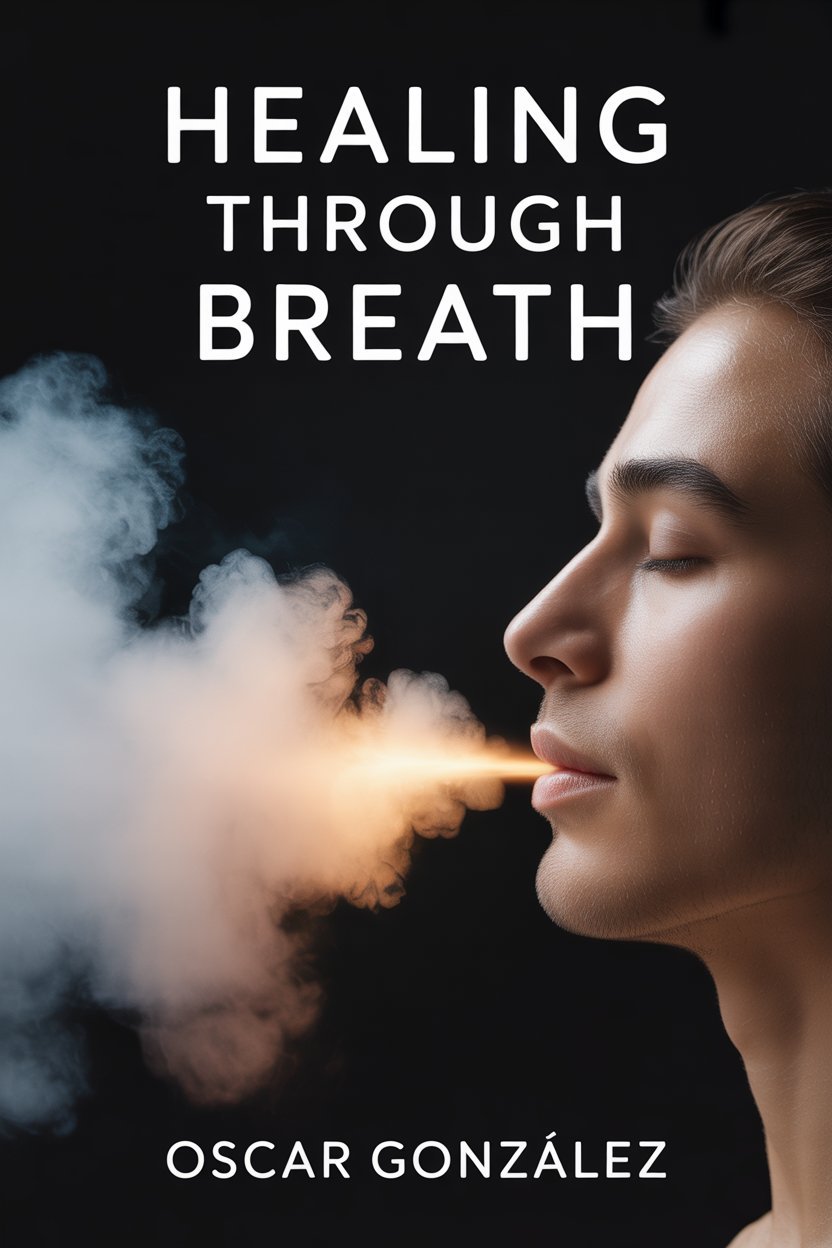
Breathing is something you do all the time, yet rarely in a conscious way. Healing Through Breath reveals why the breath is one of the most powerful—and most forgotten—tools for human healing. This book guides you to rediscover breathing not as a mechanical act, but as a direct bridge between the body, the mind, and the nervous system.
Through historical accounts, scientific evidence, and clear explanations, you will discover how different breathing patterns influence stress, anxiety, emotional balance, and the body’s capacity for self-regulation. You will understand why the body responds before the mind, and how, by regulating the breath, you can restore a sense of safety to your internal system without forcing anything.
This book does not propose aggressive techniques or miraculous promises. It teaches something deeper: how to create physiological coherence, how to step out of chronic alertness, and how to use the breath as an inner refuge in everyday life.
Perfect for those seeking emotional healing, nervous system regulation, conscious breathing, stress management, psychosomatic health, and holistic well-being, this book reminds you of something essential: you always carry with you a tool to return to yourself. You only needed to learn how to use it with awareness.
Oscar González
CHAPTER 1 — The Forgotten Origin of Breath
If you pause for a moment and listen to your breathing—just for an instant, without changing it—you will notice something curious: it is not merely air moving in and out. It is a deep, intimate, ancient movement, as if it had lived inside you for centuries. And although today breathing seems like an automatic, mundane, almost invisible function, there were times when human beings regarded it as a doorway, a sign, a complete language connecting the body to existence itself. For that very reason, to understand the true therapeutic power of breath, we must take a small journey backward. Not a philosophical one, but a human one—through people who, without realizing it, taught us that breathing is a form of knowledge.
I want you to imagine a strange scene, almost impossible for modern eyes: a solitary monk living atop a forty-meter-high stone pillar, completely isolated from the world. This is neither metaphor nor myth. In the Katskhi Monastery in Georgia, during the Middle Ages, ascetics lived on a natural column known as the “Pillar of Katskhi.” They spent days, weeks, even years there. This extreme risk was not spiritual exhibitionism, but a quest: they believed that height, isolation, and pure wind facilitated a superior form of breathing. In their chronicles, the same idea appears repeatedly: when the body is stripped of all noise, the breath becomes clear—almost transparent—and the mind can “hear” what it once ignored.
What is fascinating is how precisely they described this breathing: gentle, deep, continuous—never forced, never fearful. For them, breathing this way was not a religious practice, but a way of ordering the soul. And although we no longer live on a rock forty meters above the ground, we coexist with something equivalent: constant noise, haste, the demand to respond to everything. You may not notice it, but your breathing feels it too. The monks had only silence; you, instead, have infinite stimuli—and a body trying to adapt without informing you.
Yet breathing has its own intelligence. This is not a poetic idea; it is something science has observed, sometimes by accident. In 1913, zoologist Francis Sumner conducted an unusual experiment for his time: he studied squirrels exposed to low-oxygen air. He expected signs of deterioration, but the opposite occurred. The squirrels began developing a more efficient breathing pattern without expending more energy. Sumner called this “adaptive breathing,” and although the term never became widely known, the observation remains striking: breathing adjusts before thought. It is a silent mechanism that reorganizes the entire body in order to survive.
Here is where I want you to connect that scientific anecdote with your own life. Haven’t you noticed that in moments of fear or pressure, your breathing changes without your choosing it? Or that after a sudden shock, you take a deep breath before you understand what has happened? Breathing is, in truth, the first system of adaptation—and the last to fail. Understanding this is essential if we are to begin using it not only to live, but to heal.
But this knowledge was not confined to scientists or monks. It also appears where you might least expect it: in nineteenth-century Japanese surgical medicine. Seishū Hanaoka, considered one of the world’s pioneers of anesthesia, performed procedures astonishingly advanced for his era. What is truly curious is that he did not rely solely on sedative plants or surgical skill: he prepared his patients with prior breathing training. He taught them to inhale very slowly and to exhale even more slowly, repeating long, steady cycles.
Why? Because he had discovered—purely through observation—that those who breathed this way arrived at the operating room with fewer tremors, fewer spasms, and less panic. Today we know that slow breathing reduces sympathetic nervous system activity, lowers heart rate, and stabilizes blood pressure. Hanaoka had none of these physiological explanations; he simply observed that respiratory calm reduced preoperative shock. Patients who followed his instructions not only recovered better, but endured longer interventions.
When you read about him, it is impossible not to wonder: how many times have we underestimated something that is right under our nose? Sometimes quite literally.
And if we go back even further in time, we find civilizations that granted breath an even deeper meaning. The Etruscans, a culture predating the Romans, used a symbol in their funerary rituals called anhelitus. It was a small spiral, drawn with an almost circular gesture, representing “the final breath returning to the origin.” For them, air was not a physical phenomenon; it was continuity. Each inhalation was a loan. Each exhalation, a return. That is why anhelitus was not depicted as an endpoint, but as a curve that opens and never closes.
I invite you to reflect for a moment on that symbol. It is not a metaphysical idea, but an intuitive understanding of something we now know scientifically: breathing never repeats itself. You never inhale the same air twice, nor do you live the same moment again. Breath is the most concrete evidence that everything changes—even what you believe you control. And yet, it is also the one thing that always returns, the one thing that accompanies you even when you forget yourself.
Now imagine the invisible bridge connecting these four stories:
– the monks seeking clarity;
– the squirrels adapting;
– Hanaoka’s patients finding calm;
– and the Etruscans seeing in breath the complete cycle of existence.
All these scenes, so different from one another, point to the same truth: breathing is not a mechanical act, but a silent intelligence—a force that organizes, calms, warns, transforms, and sustains. From the ascetic facing the wind in solitude to the animal reorganizing its metabolism, all depend on the same invisible thread.
Here lies the true purpose of this book: to help you understand that thread—and to use it. Not in a rigid, mystical, or technical way, but in a human one. Because your breath is perhaps the oldest tool you possess, and yet the least explored. We are not going to turn it into a strange ritual or a demanding discipline; we are going to recognize it for what it is: a key that has always been in your pocket, waiting for you to notice it again.
And now, before continuing, I want you to do something very simple: take in air without effort, let it leave without pushing it, and observe how that small gesture slightly changes the way you are here, reading these words.
That is the starting point.
CHAPTER 2 — Breathing as a Tool for Survival
When we think about survival, we usually imagine physical strength, endurance, luck, or even instinct. Yet there is one element we almost never mention—and paradoxically, it is present before any other reaction: breathing. Not in a metaphorical sense, but in a real, physiological one. Your ability to act in a critical situation depends first on how you breathe, and only then on what you do. This may sound exaggerated, but when we look at real stories of extreme survival—people facing cold, pain, altitude, or collective panic—breathing always appears, silently, as the key that allowed the body to function when everything around seemed to be falling apart.
I want to take you to one of the most striking examples, though it is rarely discussed in relation to breathing. In 1942, Soviet pilot Alexei Maresyev was shot down over a frozen forest, completely alone, with severe leg injuries and barely any mobility. He spent eighteen days trying to make his way back to allied territory, dragging himself through the snow, in subzero temperatures and with almost no food.
Most accounts emphasize his strength, heroism, or discipline. But there is a lesser-known detail: in his diary, Maresyev wrote that he managed to maintain consciousness and coordination by “regulating the air” in order to avoid dizziness and collapse from the cold. He was not a breathing expert, but during high-risk flights he had learned to control his inhalation so that panic would not accelerate heat loss.
Think about that for a moment. In the midst of pain, disorientation, despair, and extreme cold, Maresyev had no weapons, no shelter, and no physical strength to stand. The only thing he could control was his breath—and it was enough to keep his body functioning. He was not saved by luck; he was saved by his ability to prevent fear from destroying his internal resources. His slow, deep inhalations reduced energy consumption, stabilized his pulse, and gave him small intervals of mental clarity to continue, even if only a few meters at a time.
This lesson is not about turning you into a war hero or an expert in extreme conditions. It is about something far simpler: showing you that your breath holds a power you have probably never fully used, and that it has already been crucial—often without your awareness—during the difficult moments of your own life.
To see this more clearly, let me take you to a completely different setting: Marseille, 1720. The plague had erupted once again, and the population was immersed in a collective terror that spread faster than the disease itself. Overwhelmed and without real solutions, physicians began to notice a pattern: many people were not dying from the plague itself, but from panic attacks, nervous collapse, or fainting spells that accelerated the breakdown of the immune system.
It was then that some doctors—especially Étienne Serres and a small group of assistants—began implementing a method that today might seem almost childish: counted breathing. They instructed patients to repeat cycles of “inhale for three, exhale for six,” or simply to prolong the exhalation while holding a cloth soaked in vinegar in front of the face. They believed they were purifying the air; what was actually happening was that this rhythmic breathing reduced fear-induced hyperventilation, stabilized the pulse, and prevented fainting, which in many cases proved fatal.
What is surprising is that these doctors observed how, after two or three minutes of guided breathing, panic symptoms visibly diminished: fewer tremors, fewer tears, fewer sensations of “imaginary suffocation,” fewer screams. They could not stop the plague, but they could restore the body’s temporary balance. And in an environment where the collective mind was overwhelmed, that small respiratory order became a lifeline.
There is something profoundly human in this: when the mind collapses, breathing rebuilds the structure.
Now let us travel to a completely different place—perhaps the furthest you can imagine: the coasts of traditional Japan, where the ama divers, famous for their ability to dive for minutes without equipment, have worked for centuries. What is most striking about them is not their physical endurance—remarkable as it is—but the fact that their skill does not rely solely on strong lungs. Anthropological researchers discovered that before submerging, the ama performed a brief breathing ritual: a few seconds of deep calm, a kind of internal reconnection they called isobue, “the call of the sea.”
They did not increase the amount of air they took in; they increased the quality of the mental state in which they took it. It was as if they prepared the body for descent not through force, but through serenity. In this way, with slow, balanced, tension-free breathing, they were able to reduce energy expenditure, slow the heart rate, and conserve oxygen in remarkable ways.
This example shows something crucial: survival is not always about fighting. Sometimes it is the opposite—stopping the internal struggle so the body can function efficiently.
And now I want to take you to another real story of survival, much more recent and closer to our time. In the early twentieth century, explorer Annie Smith Peck, one of the first high-level female mountaineers, climbed multiple mountains across the Americas, including Huascarán in Peru. During one expedition, she reported that at a certain altitude she began to feel dizzy, her vision blurred, and she sensed she was about to faint. One of the Andean guides accompanying her taught her a breathing pattern that involved inhaling quickly, exhaling slowly, and maintaining a soft, steady, almost musical rhythm.
Peck stated that this breathing pattern not only restored her stability, but prevented her from fainting. Years later, she would write that the technique “gave me my body back when my body seemed ready to abandon me.” She likely never imagined that, a century later, studies on altitude sickness would confirm exactly this: prolonged exhalation reduces the level of carbon dioxide trapped in the lungs and improves the blood’s acid–base balance, facilitating oxygenation of the brain at low atmospheric pressure.
Notice the thread that connects these four stories:
– a wounded pilot who survives by regulating his breath,
– doctors who calm a terrified city through counted breathing,
– divers who master the sea through inner serenity,
– and an explorer who avoids collapse by following an ancestral rhythm learned in the Andes.
They all speak of the same truth: breathing is the first survival tool we possess, yet it has gone unnoticed because it is too accessible, too obvious, too everyday.
You have likely experienced moments when breathing protected you without your realizing it—a fall, a scare, sudden pain, a nighttime jolt awake, a surge of nerves. Before thought arrived, your body was already acting: inhaling deeply, exhaling slowly, restoring control. Not because you were conscious of it, but because you are designed to survive through breath.
What we will do later is turn that instinctive capacity into a conscious tool. Not for extreme situations, but for everyday life—for accumulated tension, overwhelming emotions, moments when you feel you cannot go on. Like Maresyev, like the patients of Marseille, like the ama divers and Annie Peck, you too can use your breath as a mobile refuge, an internal switch that activates when you need it most.
And when you understand how it works, you will feel something profound: you are not as unprotected as you once believed. You always carry with you a way to return to yourself.
CHAPTER 3 — Breath as a Hidden Science
Throughout human history, breathing has been treated as something obvious and ordinary, yet it has also inspired deep fascination. It was so common that it became invisible—and yet so powerful that different cultures, mystics, scientists, and sailors treated it as a kind of secret science: a bridge between the physical and the intangible. When we speak of “breath as a hidden science,” we are not referring to an esoteric mystery by default, but to a form of wisdom buried in unexpected places—among mathematicians who breathed according to numerical sequences, mystics who turned inhalation into an act of spiritual expansion, scientists who discovered that fear leaves its mark before the mind becomes aware of it, and sailors who defied storms by staying upright through breathing rhythms passed down from generation to generation.
To begin, let us look at one of the most unlikely figures you might imagine in this context: the Russian mathematician Pafnuty Chebyshev, known for his polynomials, his work on approximation, and his brilliance in number theory. He was not regarded as a mystic or a philosopher; above all, he was rigorously rational. And yet, those who worked with him left behind curious accounts: Chebyshev had a very particular way of controlling his breathing when he focused on solving complex problems.
According to scattered letters and notes, the mathematician inhaled following sequences based on perfect squares. He inhaled for 1 second, exhaled for 4. Then 2 and 9. Later 3 and 16. This was not numerological whimsy, but a way of inducing a deep mental state using a language he understood intimately: numbers. For Chebyshev, breathing organized according to mathematical patterns created a stable rhythm that allowed him to isolate his mind from external noise.
This reveals something intriguing: even in the most rational forms of thought, there exists an intuition that air shapes the mind. Chebyshev did not explain this method in spiritual terms, but he treated it as a personal—almost secret—tool for entering the concentration he required. His breathing became a bodily algorithm.
And while the Russian mathematician organized his breath through perfect squares, elsewhere in the world, far from formal science, the Sufis were developing a completely different yet surprisingly parallel tradition. Within Sufi teachings appears the concept of nafas as-sadr, roughly translated as “the breath of the expanded chest.” This is not simply deep inhalation; it involves a symbolic opening, an intention to widen the inner space so that consciousness may rise.
Sufi masters described nafas as-sadr as a state of breathing in which not only air enters, but also light, calm, and clarity. Its purpose was not physiological—though it inevitably produced physical effects—but spiritual: to free the mind from internal constraints. Disciples were taught to feel how, upon inhalation, energy expanded upward and outward, as if the chest became a space without walls. Exhalation, in turn, was seen as a release of mental burdens.
What is remarkable is that, although the language sounds poetic, practices like this generate measurable effects: conscious expansion of the chest activates stretch receptors that send signals to the vagus nerve, reducing stress. The Sufi did not speak of neurophysiology, but described with precision the subjective sensation of a nervous system entering calm. Science would arrive centuries later to confirm what mystics had discovered through the body.
Meanwhile, in the twentieth century, a Russian neurophysiologist named P. K. Anokhin—a disciple of Pavlov and a pioneer of functional systems theory—was studying how the organism anticipates events before they fully unfold. His experiments led him to a striking discovery: fear alters the exhalation before it alters the pulse.
This means that even before you understand what is happening, before your heart rate increases, before any conscious thought arises, your breathing has already reacted. Anokhin observed that, when faced with a threatening stimulus, subjects—both human and animal—did not necessarily inhale more forcefully, but rather shortened the exhalation, as if the body were preparing for movement, slightly holding the air to respond more quickly.
This finding aligns perfectly with what we now know about the autonomic nervous system: prolonged exhalation activates the mode of calm, while shortened exhalation activates the mode of alertness. In other words, fear enters through the exhalation. It is an internal doorway.
Why is this so important? Because it reveals a secret that almost no one takes advantage of: if you control your exhalation, you can modulate your emotional response before it overwhelms you. Anokhin discovered this as a scientist, but his conclusion—though he did not frame it this way—is almost mystical: breathing precedes thought.
Now I want to take you several centuries back, out to the open sea, to a completely different setting. Imagine the decks of ships in the seventeenth century, when sailing was not a romantic pursuit but a harsh and dangerous labor. Sailors climbed thirty-meter masts in the midst of storms, with wind battering them, wet wood beneath their feet, and the constant tension of falling into the void. There were no harnesses, no railings, no modern safety—only hands, feet… and breath.
Logbooks and orally transmitted instructions reveal a fascinating detail: sailors used breathing patterns to stabilize themselves at height. They knew that if they breathed in a frantic way, they would lose balance. So they followed a very specific rhythm: inhale briefly, exhale long while moving a hand or foot, inhale again, exhale for the next movement. The captain of an English merchant ship wrote: “A man who does not govern his breath does not govern the mast.”
They did not know the biological explanation, but they knew the practice: long exhalation reduced muscular tremor and allowed the center of gravity to remain more stable. That made the difference between securing the rope and falling into the sea. For them, breathing correctly was not a spiritual or scientific discipline, but a matter of life and death—a hidden science transmitted without sophisticated names, yet etched into the body.
If we bring these four worlds together—the mathematician who breathes in sequences, the mystic who expands the chest to elevate consciousness, the scientist who discovers that fear begins in the exhalation, and the sailors who cling to life on a mast through breathing rhythm—a powerful truth emerges: breathing has always been a boundary between the visible and the invisible.
On one side, it is pure physiology; on the other, perception, emotion, intuition, and focus. Perhaps that is why so many disciplines treat it as a key: it opens doors to calm, to mental clarity, to bodily control, and to deep self-perception.
Later, we will begin to decipher how to use this key consciously. But before moving forward, I want you to hold on to one idea:
there is no such thing as neutral breathing.
Every inhalation and every exhalation is modifying something within you, even if you do not notice it.
In that sense, breathing truly is a hidden science—always acting, always transforming, always writing into your body things your mind is only beginning to understand.
CHAPTER 4 — Breathing, Mind, and Perception
If up to this point we have explored breathing as a means of survival, as a hidden science, and as an ancestral tool, we now enter a territory that everyone experiences but few truly understand: breathing as a modulator of the mind and of how we perceive the world. It may seem like an invisible thread, but in reality it is a bridge—it links the body with attention, emotion with thought, memory with presence. And although today we speak in terms of neurology and psychology, this intuition has been alive for thousands of years.
The oldest evidence of this can be found in a nearly forgotten archaeological curiosity: the Mesopotamian sign NIŠI, engraved on tablets more than 4,000 years old. NIŠI is translated as “the breath that awakens the mind.” Not breath, not wind, not spirit—but the breath that awakens. For a culture that created some of the earliest forms of writing, measured stars and rivers, and organized laws and myths, the choice of a specific sign for this idea reveals something profound: breathing was not merely a vital act, but a way of igniting consciousness.
This sign appears alongside words related to attention, memory, or judgment, as if the scribes understood that thought does not arise in a vacuum, but in a breathing body. Today, when you take a deep breath before a difficult conversation, or when you feel clarity after a long exhalation, you are repeating something the Mesopotamians had already perceived without scientific terminology: the mind awakens when the breath becomes ordered.
We leap forward thousands of years, yet the same idea remains—breathing as a regulator of perception. In the twentieth century, during polar expeditions, the explorer Roald Amundsen—the first human to reach the South Pole—became, unintentionally, a teacher of applied breathing. Contrary to popular belief, his success was not due solely to equipment or planning, but also to seemingly minor details, such as how one breathes under extreme conditions.
Amundsen taught his team a crucial technique: to breathe exclusively through the nose when temperatures dropped below –30°C. This was not a trend; it was survival. Nasal breathing warmed the icy air before it reached the lungs, preventing micro-injuries and rapid loss of body heat. But there was more: breathing through the nose forced the team to maintain a steadier rhythm, reducing the anxiety that extreme cold can provoke.
According to his own diary, when the wind battered them with violence, they would all stop for a few seconds, close their mouths, and breathe through the nose until they could “calm the inner noise.” For Amundsen, this gesture not only protected their airways, but restored mental clarity. Extreme cold can distort perception, making it slow or confused; nasal breathing helped counteract that effect. It is fascinating to see how such a simple—such an everyday—technique became a psychological anchor in one of the most hostile environments on Earth.
But one does not need to be in Antarctica to understand how breath alters perception. Sometimes it is enough to observe the life of an artist. The poet Zuzanna Ginczanka, one of the brightest and most tragic voices of twentieth-century Polish literature, had a very particular relationship with breathing. Before every recital, Ginczanka performed a silent ritual: she breathed in rhythmic cycles of three phases—inhalation, a brief pause, and a long exhalation—repeating them until she felt that “the mind entered the same cadence as the poem.”
Those who knew her said this practice was not merely to calm her nerves, but to access a different perceptual state—a way of fully inhabiting each word. The poet claimed that if she stepped onto the stage without this prior breathing, she felt that “the phrases did not vibrate in the same way,” and that her attention became diffuse. Breathing was entering the poem. Breathing was opening an inner door.
Her experience reminds us of something essential: perception depends on internal rhythm. When we breathe quickly, the world feels strange and fragmented; when we breathe slowly, a form of presence emerges that many describe as clarity or focus. Ginczanka transformed this intuition into an artistic technique, turning air into the invisible metronome of emotion.
However, the relationship between breathing and the mind has not always been poetic or exploratory. At certain moments in history, it was regulated as a clinical method—sometimes in ways that seem rudimentary by today’s standards. One of the most peculiar examples comes from Belgium in 1848, where physicians in several hospitals experimented with calibrated glass tubes to treat nervous crises.
These tubes, of varying diameters and lengths, forced patients to exhale through a precise resistance. The goal was simple: to lengthen the exhalation and, by doing so, slow episodes of panic or agitation. The doctors did not speak in modern terms of the parasympathetic nervous system, but they intuited that regulating breathing could organize the mind. Some reports describe how, within minutes, patients’ trembling hands began to stabilize.
Although these devices seem primitive today, they anticipated something science would confirm a century later: controlled exhalation activates the brain’s calming mechanisms more quickly than any verbal instruction. In a way, those Belgian tubes were the ancestors of modern breathing techniques for anxiety, stress, and emotional dysregulation.
And this is where everything connects to you. We do not live among Mesopotamian tablets, nor walk like Amundsen across endless glaciers, nor recite poetry in the literary cafés of Warsaw, nor use glass tubes to halt a nervous crisis. But we do share something with all of them: a respiratory system that is constantly informing the mind.
Breathing can make you perceive the world as safe or threatening. It can sharpen an emotion or distort it. It can accelerate thoughts, slow them down, or reorganize them. Every breathing pattern is a lens.
For example, when you inhale rapidly and shallowly, your brain interprets the environment as uncertain. You do not need a real predator—an argument, an unexpected message, or a vague worry is enough. The mind becomes hypervigilant. By contrast, when you exhale slowly—as the Belgian patients did, as Ginczanka did before reciting, as Amundsen’s explorers did—your perception changes. Thoughts stop colliding and begin to align.
That is why saying “take a deep breath” is not a simplistic suggestion: it is a neurobiological key.
Your breathing is always sending signals—even when you are not aware of it.
We often believe the mind is in charge, but it is breathing that sets the emotional tone upon which the mind thinks. It is the foundation of the inner landscape.
And so an inevitable question arises:
If your breathing can modify what you feel, think, and perceive… why not learn to guide it with intention?
CHAPTER 5 — Breath as an Inner Force
There is something deeply intuitive in the idea that breath is more than air moving in and out of the body. We feel it when a single breath restores calm, when a sigh brings relief, or when a steady inhale prepares us to act. Yet across history, different cultures took this perception much further, treating breath as an inner force—capable of revealing emotional states, sustaining faith, enhancing skills, and connecting with what cannot be seen. This chapter moves through that territory: breathing as intimate energy, as an invisible power that shapes posture, intention, and spirit.
To see this clearly, let us first travel to the eighteenth century, in the heart of Prussian territory, where a little-documented and now almost forgotten phenomenon once existed: the “respiratory physiognomists.” Unlike classical physiognomy—which attempted to read character through facial features—these practitioners observed the way a person inhaled in order to diagnose their emotional state. It was not modern science, of course, but it was a striking attempt to understand mood through breath.
They would stand before the patient, watch in silence, and observe how air was drawn in:
- if the shoulders lifted, it was interpreted as restlessness;
- if the air entered in short, abrupt bursts, it was attributed to contained anger;
- if the inhalation was wide but tense, they spoke of active melancholy;
- if it was deep yet heavy, they pointed to prolonged sadness.
What is remarkable is that, although their interpretations were rudimentary, the intuition was sound: the way we inhale reveals more about our inner state than many words ever could. Today we know that inhalation directly alters activation of the sympathetic nervous system, modulating alertness, tension, motivation, and emotional response. Those Prussians, without understanding the physiology, had discovered something real: breath is a window inward.
And just as in Prussia emotional states were read through breathing, in another era—medieval Europe—a surprising mystical paradox emerged within certain spiritual groups known as the Begards. These movements, marginalized by the official Church, practiced forms of inward spirituality in which breathing occupied a central place.
Among their writings appears a disconcerting phrase: “God enters through the nose.” They did not mean this literally, but rather expressed the paradox that the divine is not found only in elevated thought or ascetic renunciation, but in an act as ordinary as breathing. They believed breath to be a spark of the sacred manifesting in each person, and that inspiration—the act of taking air in—represented a constant renewal of the bond between the individual and the transcendent.
For them, each inhalation was an invitation to allow something greater to enter, not as dogma, but as presence. And each exhalation was an offering: the act of releasing whatever darkened that connection. Though their ideas were persecuted, the paradox survived in hidden manuscripts. Seen from today, this vision can be read as a powerful metaphor: sometimes the most profound truths are hidden in the most ordinary acts. Breath—so simple, so repetitive—became for the Begards the most intimate expression of the divine.
A change of setting takes us to the Kalahari Desert, where some of the world’s finest trackers—the San bushmen—developed a completely different use of breath: not for introspection, but for extreme precision of perception. San trackers can follow nearly invisible traces for hours, sometimes days, guided by details imperceptible to most people. But there is an aspect few know: they voluntarily reduce their breathing while tracking.
This is not only to avoid noise—though that helps—but to keep the senses in a state of refined alertness. They know that when breathing accelerates, even slightly, the pulse rises and perception becomes distorted: sounds blur, small movements are missed, the mind jumps between stimuli. By slowing the breath, lengthening exhalations and softening inhalations, they create an inner state in which attention sharpens.
The San say that when you breathe heavily, “you frighten the landscape.” And they are right: rapid breathing signals the brain that something is wrong, activating survival mechanisms that narrow perception. Calm breathing, by contrast, opens the senses. This practice, passed down through generations, turns breath into an inner force that sustains attention beyond physical fatigue.
And if the San use breathing to sharpen external perception, in Eastern Christianity a tradition developed in which breath refined inner life. This is the Hesychast chant, a practice that arose in the monasteries of Mount Athos and was transmitted in secrecy for centuries. The Hesychasts sought to reach a state of deep stillness—hesychia—by unifying three elements: breath, prayer, and rhythm.
Their most repeated prayer was, “Lord Jesus, have mercy on me,” but what truly mattered was how it was spoken. The phrase was divided into two halves: inhalation during the first part, exhalation during the second, synchronizing breath with words. This pattern could be sustained for hours, days, even weeks. They were not seeking trance, but inner unification—allowing breath to cease being an automatic act and become a sacred movement.
The monks described that, once the rhythm stabilized, a sensation of inner light appeared, a gentle clarity. Today we might explain this through continuous activation of the vagus nerve, reduction of mental noise, or deep regulation of the nervous system. But what is astonishing is that the Hesychasts discovered this mechanism centuries before neuroscience, simply by listening to the rhythm of their own bodies.
If we place these four scenes side by side—the Prussians attempting to read emotion through breath, the Begards finding God in inhalation, the San trackers sharpening perception by slowing their breathing, and the Hesychast monks synchronizing prayer and breath to reach stillness—a powerful idea emerges: breath does not merely activate the body; it shapes the inner world.
It is a force that directs intention, reveals emotional state, refines perception, and gives form to spiritual experience. We may ignore it, but it never stops influencing us. And when we learn to use it consciously, breathing ceases to be an automatic act and becomes an inner tool—a way of directing life from within.
Perhaps it will surprise you to discover that all these examples, so different in culture, era, and purpose, point to the same truth:
breathing is a force that organizes the inner landscape.
It can order the mind, stabilize emotion, sharpen the senses, or open spiritual spaces. Air may seem light, but its effect is heavy. And when you take it in with intention, you can change your inner state without changing anything outside.
CHAPTER 6 — Breathing and Extreme Adaptation
In the most unlikely folds of the world—where life seems balanced on a trembling pin—breathing becomes an art bordering on secret engineering. Where air itself appears as an adversary, every creature, every culture, every story has carved out its own pact with it. This is not a simple exchange of oxygen; it is a constant negotiation with limits, an intimate pulse that allows one to remain here one minute longer.
Science often speaks of the respiratory mechanism as if it were a predictable metronome, but observing certain animals is enough to suspect that entire chapters of that manual have yet to be written. Dolphins, for example, possess a peculiarity that seems torn from a mythologist who refused to obey classical biology. They are capable of voluntarily restarting their breathing, as if they carried an internal switch to turn conscious respiration on or off. Their brains are equipped with dual vigilance, preventing them from drowning while they sleep.
There is no human-like autopilot: every inhalation is a choice. This quality turns them into masters of the boundary between wakefulness and sleep, guardians of a respiratory rhythm that never surrenders to neglect. When they surface, the expelled jet of air is not merely a clearing of the lungs, but almost a gong announcing, “I am still here—by choice.”
That choice echoes distantly in kutral, the Mapuche inner fire. A tradition cultivated more through whispers than public ceremony, as if it were a secret shared between blood and wind. Those who practice this discipline maintain that breathing can kindle a deep warmth—not metaphorical, but physical, perceptible beneath the skin. The inner fire does not burn; it ignites. It functions as an intimate brazier to face the overwhelming cold of the mountain range or inner states where the spirit begins to fray.
It is a method of endurance that does not rely on muscles or tools, but on an internal combustion regulated by the rhythm of breath. For moments, the body seems to become a self-sustaining furnace, generating warmth that defies the environment. Each inhalation is a spark; each exhalation, an ember settling into place.
Breathing as a barometer of survival also appears in settings that are less ritualized—dirtier, harsher, more unforgiving. Deep within the earth, where the sun becomes a rumor difficult to remember, Asturian miners learned to listen to their breathing not to calm the mind, but to stay alive. In narrow tunnels, the presence of firedamp or other lethal gases revealed itself through a subtle change in the sound of one’s own breath: sometimes a sharper whistle, sometimes a heaviness unrelated to effort.
Breathing became a detection instrument—an organic sensor more sensitive than safety lamps. Like a violinist tuning in to hear whether a string will vibrate or snap, they tuned their chests to catch the toxic note disguised within the air. It was an active form of listening, a bodily auditory art passed from miner to miner without manuals—only through the hard-earned wisdom of fear survived.
Perhaps the most unexpected record comes from the tropical forest, where orangutans have turned breathing into a message. This is not a language encoded in words, but a vibrant communication made of forceful exhalations. These rhythmic bursts serve to mark territory, attract a mate, or warn intruders. Some researchers have described it as a kind of “audible heartbeat” projected into the trees—a respiratory drum.
Orangutans inflate their laryngeal sacs and release a deep exhalation that travels through the foliage like a low wave. It is warning and poem at once, an affirmation of presence carved in breath. Standing before them, one understands that breathing can become a social gesture—a linguistic act without an alphabet.
All these expressions may seem like scattered fragments, but together they form a mosaic in which breathing ceases to be an involuntary action and becomes an elastic capacity. At the edges of the world and of the body, breathing turns into tool, ritual, alarm, communication, source of heat, or conscious vigilance. The differences between species and cultures only reveal the many paths air takes when it encounters intention.
The explorer observing dolphins might see in them a prototype of absolute respiratory control. The anthropologist entering Mapuche territory would discover breathing as a source of silent resilience. The geologist descending with miners would perceive air as an unpredictable adversary, measured through the lungs. The primatologist studying orangutans would witness breath as a social instrument. And all of them, at their core, would arrive at the same root: air is malleable, but it yields only when worked from within.
Extreme adaptation is not achieved through physical effort alone. It requires sensitivity to one’s inner state—a sensitivity that, in noise-saturated societies, is often lost beneath layers of distraction. Those who master their breathing discover that they can regulate the nervous system, alter the perception of cold, anticipate invisible dangers, or attune themselves to other bodies.
Although these stories arise from very different contexts, they converge on a single idea: breathing remains an incomplete tool until it becomes conscious.
Imagine a thread running through all these figures—a thread made of warm air, winding from the lungs of a dolphin to the laryngeal sacs of an orangutan. A thread that ignites inner fire in a Mapuche dwelling and vibrates in the attentive ear of a miner underground. This thread connects worlds that will never meet on a timeline, yet share the same wisdom: sometimes the boundary between remaining and disappearing is reduced to a small adjustment in the frequency of breath.
Breathing is a flexible architecture. In its most basic form it sustains life; in its elevated form it allows life to be shaped, bent, prolonged. Those who observe these stories receive no instructions, only an invitation to sense that air is more than a resource—it is a tool refined through practice.
No deep ocean, ritual mountain range, dark mine, or humid jungle is required. Attention is enough.
Perhaps now we can begin to sense that breath unfolds like a map still incomplete. For the moment, it is enough to recognize that those who have touched the limits—by choice or by fate—have found in breathing an ally as ancient as life itself and as versatile as the imagination of the body. At every extreme frontier, a new way of breathing appears, as if air dons the attire required by each world. And yet, it is always the same air.
CHAPTER 7 — The Breath That Transforms Life
There are moments when breathing feels so obvious that it nearly vanishes from the landscape of awareness. One breathes because one lives—or lives because one breathes—and within that circularity lie infinite nuances capable of altering everything from intellectual concentration to the most intimate spiritual perception. When we examine certain lesser-known episodes from history and science, a common thread emerges: when breathing becomes deliberate, it ceases to be merely a biological process and becomes a mechanism of personal transformation.
The scientific experience of physicist Piotr Kapitza is one such thread. Known for his pioneering work in low temperatures and intense magnetic fields, Kapitza repeatedly noted—in private laboratory notebooks that circulated only minimally among colleagues—that he relied on a long, clearing breath before attempting to solve particularly complex problems. It was neither a formal technique nor an esoteric ritual. He would simply step outside the laboratory, lean against a railing, and take a slow inhalation so expansive that, as he put it, it “forced the mind to stop its agitation.” Only then would he exhale abruptly, as if expelling accumulated confusion.
Interestingly, the notebooks in which he mentions this practice coincide with moments of key discoveries. What matters here is not to claim that breathing caused those breakthroughs, but to observe how, for a scientist accustomed to measuring and calculating, breath functioned as a tool of mental recalibration—a way of entering a different state, more lucid and less reactive.
This pattern—breath as a fine adjustment of inner state—also appears in contexts far more extreme than a laboratory. In the 1930s, Italian aviators from experimental units developed an improvised technique to better withstand G-forces during violent maneuvers. Before the existence of modern compression suits designed to prevent blackout, pilots depended almost entirely on their bodies and their ingenuity. One of them, Luigi Marzolini, described an alternating breathing method: brief nasal inhalations, a momentary hold, followed by exhalation through tightened lips, repeated in an irregular cadence.
The aim was not relaxation, but the creation of internal pressure to keep blood flowing to the head. The alternation of rhythms and micro-retentions produced a kind of “bodily metronome” that stabilized the system during sharp turns. According to internal reports of the time, pilots who adopted this method experienced the initial symptoms of tunnel vision three to five seconds later than others. That difference could determine whether a flight remained under control or ended in a fatal accident. It was not a codified technique, but rather a cockpit secret, passed along in hangars during brief conversations before a mission. Even so, it demonstrates that breathing—even in environments of extreme risk—can alter physiological balance enough to extend human capability.
If we move centuries backward, the connection between breath and transformation appears wrapped in symbolism. In some late Egyptian papyri, the expression “breath of rebirth” appears, associated with rites of restoration of body and spirit. This was not merely poetic metaphor: the texts describe a specific procedure in which a master—often a priest-physician—blew air onto the forehead and hands of the initiate while the latter performed deep, rhythmic inhalations.
The external breath was understood as a gesture that “reactivated the circulation of the invisible,” while the initiate’s own breathing represented the reawakening of internal capacities. What fascinates scholars studying these fragments is that the rite carried a symbolic reading, yes—but also a psychological function. The initiate, who typically came to the ritual during moments of transition—entering a profession, mourning, recovery from illness, or passage into adulthood—experienced a genuine sense of renewal, as if the simple act of breathing consciously and in accompaniment reorganized their inner narrative. This blend of symbolism and physiology suggests that even in ancient cultures, breathing was seen as a bridge between the outer world and an inner change difficult to name.
There is yet another approach, far more austere, found among the staroveri, the communities of Russian Old Believers. Known for their resistance to certain liturgical reforms in the seventeenth century, these groups developed peculiar practices to maintain mental clarity within a rigorous way of life. Among them was a simple yet forceful technique: strong exhalations to “expel impure thoughts.”
These exhalations were not gasps or sighs, but firm bursts of air, almost as if extinguishing an invisible candle. They were performed repeatedly—three or seven times—depending on the severity of the distraction. For the staroveri, unwanted thoughts were not merely mental occurrences, but disturbances that clung almost physically to the chest; thus, exhalation became a form of direct cleansing.
Although this interpretation may seem purely spiritual, modern psychophysiological studies have shown that rapid, forceful exhalations activate vagal circuits that momentarily reduce tension and recalibrate attentional focus. Without knowing it, the staroveri were making use of a real neurological mechanism.
What unites all these accounts is the recognition that breath is not only a mechanism of survival, but a tool of transformation. But what, exactly, is being transformed? In the scientific examples, it appears to be cognitive state: Kapitza’s long inhalation shut out mental noise; the aviators’ alternating breathing altered blood distribution to gain precious seconds of clarity. In the Egyptian rites, the change was both emotional and symbolic—a reconfiguration of the initiate’s personal narrative. Among the staroveri, breath served as an instrument of inner discipline, capable of interrupting repetitive mental patterns.
And yet, despite their differences, these practices share a common core: they all recognize that breath can interrupt inertia. When breathing remains automatic, one continues rolling along with the momentum of thoughts, emotions, or bodily sensations. But when breathing becomes deliberate, something reorganizes. It is as if a small window opens in the continuity of experience—an opportunity to adjust course, whether to think more clearly, withstand physical forces, pass through a ritual threshold, or remember a moral path.
This transformative capacity does not always appear through grand gestures. Sometimes a single moment is enough: a deeper inhalation, a stronger exhalation, a rhythm altered on purpose. In this sense, breathing is one of the few resources always available to us, even in the most adverse moments. It requires no external tools, no prior preparation, no special conditions—only attention.
Perhaps that is why so many traditions, from the most pragmatic science to the most symbolic spirituality, have placed quiet trust in breathing. And perhaps that is why this chapter can close with a simple idea: every time we breathe consciously, even for a few seconds, we give ourselves the opportunity to be transformed. Maybe not dramatically, maybe not immediately—but enough to feel that the path remains open, fresh, and renewed.
Accede a libros y audiolibros exclusivos
Regístrate gratis y desbloquea libros completos y audiolibros que no están disponibles públicamente.